|
【New Landmark!】Application of Low-Density Gray Silicon Substrate Panels in Wuxi Symphony Hall
Project Overview The total construction area of Wuxi Symphony Hall is approximately 100,000 square meters, covering a 1,500-seat main concert hall, a 500-seat chamber music hall, as well as supporting rehearsal rooms, rest areas and other diverse spaces. The interior of the building extensively uses curved lines and curved surface shapes to simulate the flowing rhythm of music. At the same time, as an acoustically sensitive venue, the concert hall not only pursues the artistic tension of the building's appearance, but also puts forward strict requirements on the acoustic performance, shape adaptability and environmental safety of the internal space. After multiple rounds of material selection and technical demonstration, low-density gray silicon base panels have become the preferred material for the ceiling, partition wall base, cylindrical wrapping and curved surface parts of the project due to their characteristics of fire resistance, environmental protection, high toughness and ease of construction. 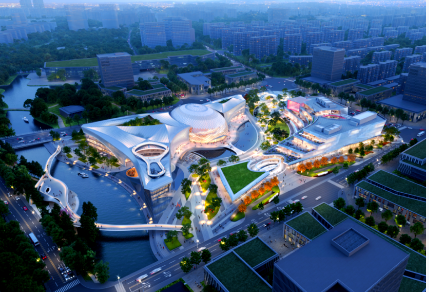
Project Details
Project Name: Wuxi Symphony Hall
Applied Product: Low-density gray silicon base board
Used Thickness: 9mm, 12mm, 15mm, 18mm
Application Parts: Partition wall base, ceiling, curved surface modeling, cylindrical wrapping
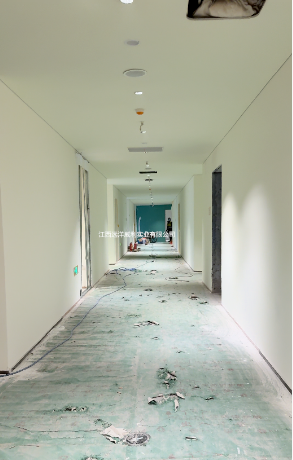
Application of Low-Density Gray Silica Base Plates in This Project
1. Partition Wall Areas: An Efficient Solution for Sound Insulation and Space Division
The partition walls of the concert hall need to meet the requirements of space division, sound insulation and noise reduction, as well as fire protection and environmental protection. The low-density gray silica base plates adopt a unique production process and have a dense internal pore structure, which effectively blocks sound transmission between different areas, ensuring the acoustic independence of spaces such as rehearsal, performance and audience rest areas. In addition, the plates have the characteristics of Class A1 fire resistance and no harmful substances such as formaldehyde, meeting the green building standards and creating a healthy and safe experience environment for the audience. 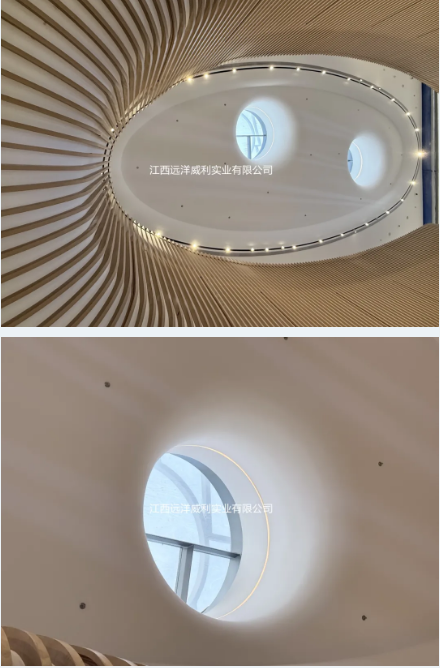
2. Ceiling system: combining both modeling and acoustic performance
The ceiling of a concert hall is not only the core of space decoration but also a key carrier for acoustic optimization. The low-density gray silicon baseboard is lightweight, which significantly reduces the load-bearing pressure on the ceiling keel. Its nail-holding power can reach 1000N, and combined with its bendable property, it lays a solid foundation for the modeling and decorative effect of the ceiling layer. In terms of acoustic design, the porous structure of the board itself can effectively absorb some noise. Cooperating with the professional sound-absorbing wall structure, it forms a coordinated noise reduction system, ensuring uniform sound field and clear and transparent sound quality in the hall. At the same time, the board has excellent fire resistance, reaching the A1-class non-combustible standard, providing reliable guarantee for the fire safety of large public buildings. 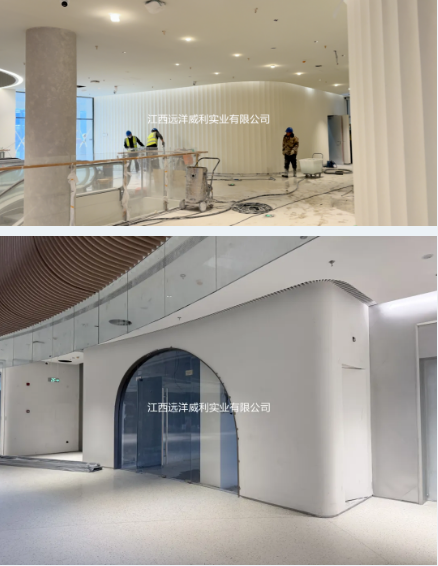
3. Curved Surface Modeling: The Carrier for Realizing Dynamic Creativity
Curved parts in buildings, such as curved suspended ceilings and curved background walls, test the plasticity and adaptability of materials. The low-density gray silicon baseboard does not crack or deform during the bending process, and can accurately fit the designed curvature, perfectly presenting the design concept of "flowing music". Whether it is a large-curvature spatial transition or a small-scale curved surface decoration, the board can easily handle it, providing sufficient space for designers to realize their creativity and making the architectural space more artistically appealing. 4. Wrapping columns: Balancing shape adaptation and structural stability
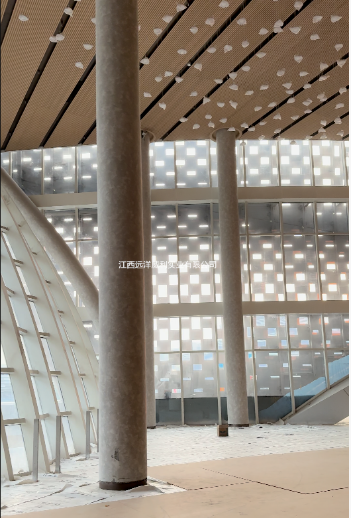
The cylindrical shapes in the concert hall are important elements of the space design, requiring that the wrapping material can both fit the curved surface of the columns and have sufficient structural stability. The low-density gray silica baseboard has excellent toughness and can be flexibly bent according to the diameter of the column. It can achieve tight wrapping without complex preprocessing techniques, presenting a smooth curved surface effect. At the same time, the board has moderate strength, can form a stable protective layer after wrapping, effectively protect the column structure, and has a smooth and flat surface, providing convenient conditions for the subsequent construction of the decorative surface layer.
The successful application of low-density gray silicon-based boards in the Wuxi Symphony Hall project is not only a perfect integration of architectural art and material technology, but also confirms the core of a "good house" — whether it is a landmark building that carries the memory of urban culture or a residential space that guards daily life, good materials are always the cornerstone of good buildings. With its strength combining functionality and aesthetics, low-density gray silicon-based boards have become one of the enablers of this urban landmark. They not only meet the multiple stringent requirements of the concert hall for performance, shape and environmental protection, but also ensure the life cycle of the building with their durable and stable quality. From art palaces to living spaces, the creation of a "good house" cannot be separated from the support of "good materials". With its reliable performance and wide adaptability, low-density gray silicon-based boards are practicing this concept in more high-end architectural scenarios, injecting solid confidence and flexible charm into every landmark building. |

 Ocean Willie official public number
 YUANYANG WEILI


